
The 10 Writing Rules That Made Me Over $1M Online
The No-Fluff Guide To Profitable Writing & Content Creation

I’ve made over $1,000,000 from writing and creating content on the internet since 2018.
None of this happened by winning awards, landing book deals, or going viral in my niche.
Instead, I followed a set of rules, focused on content types that drive revenue, and spent years building funnels and audiences that convert.
Today, I’m sharing 10 of the most important lessons I’ve learned along the way as a content creator that you can apply to your own business.
Ultimately, if you treat writing like a hobby, it will pay you like a hobby. But if you treat writing like a business, it can genuinely change your life.
Let’s get to it!
💵 Want to build an amazing website or app for your one-person business? Then you need to check out Emergent.
Emergent is a leading vibe-coding platform that lets you build ready-to-market websites, apps, and even SaaS products for your business.
You don’t need to know how to code or to have a massive budget anymore. You just need text prompts and a vision, and Emergent can bring your business to life.
Turn your business into reality 👉 Get started with Emergent today!
Rule #1: Consistency Beats Inspiration - Build Content Creation Into Your Daily Routine
Consistency is the #1 factor that separates writers and content creators who scale their businesses versus ones who never make any money.
I am convinced of this. I’ve seen it play out hundreds of times amongst my friends, colleagues, and people I follow.
Because consistency is so vital, you need to build writing and content creation into your daily/weekly schedule.
I know life is busy, especially for parents. But even 15-20 minutes per day will put you miles ahead in the long-run versus only creating when you ‘feel like it.’
At one stage, I was completing my degree while working a full-time internship. I was also working part-time for an advertising agency, so my schedule was pretty slammed.
I still managed to squeeze in daily blogging/writing of some kind. 15 minutes in the morning, 15 minutes before bed, and even 15 minutes at work (Pro Tip: you can write content for yourself in an email, so it never looks suspicious if someone walks by).
That’s an extra 45 minutes per day, which is almost 4 hours of writing time throughout the work week!
Rule #2: Understand Revenue-Driving Content Formats
Not all content makes money.
Some content is useful for building your personal brand or authority in a niche. Other content types can help you reach a wide audience before you warm them up into customers.
A small percentage of your content actually drives revenue.
It’s a prime example of the 80/20 (Pareto Principle). For my content businesses, this looked like creating:
How-to guides
Product reviews (especially negative ones where you then recommend alternatives as an affiliate!)
VS content (i.e. Webull vs Moomoo, HelloFresh vs Blue Apron, etc.)
Top X content / buying guides
In-depth case studies never really moved the needle as much for me. Same goes for other kinds of content, like podcasts, short-form videos, or writing more personal articles.
Again: other kinds of content types still have their benefits. But take a look at your content business and weekly output. If you’re spending hours creating Instagram posts or blog posts for your website that don’t get any eyeballs, it’s time to reprioritize efforts.
Rule #3: Honesty Is A Competitive Advantage For Your Writing
As writer and affiliate marketer, two particular CPA offers I run have earned me over $250,000 in commissions.
Here’s the earnings screenshot from my Impact account:
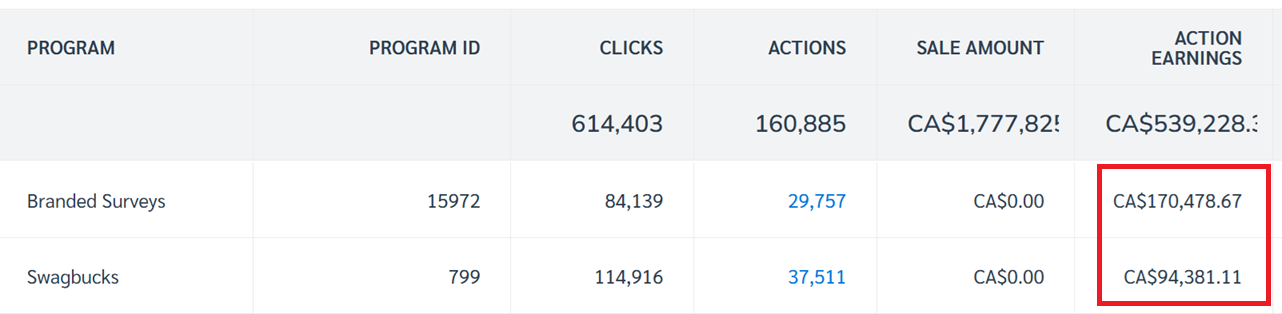
Both of these partners are survey companies/reward sites where you complete short online tasks to get paid. I cover them, and similar companies, on my content sites and YouTube channel.
For years, my blog reviews for both brands ranked on Google and YouTube. They still rank today for some queries. And I promote both companies every day in my content, whether that’s an email blast or some related content I’m writing.
Want to know the secret to getting people to convert on these offers?
I signed up for them myself, spent some time completing surveys on them, and then cashed out with them. And I documented the entire process for other people to see.
That’s it. That’s the secret!
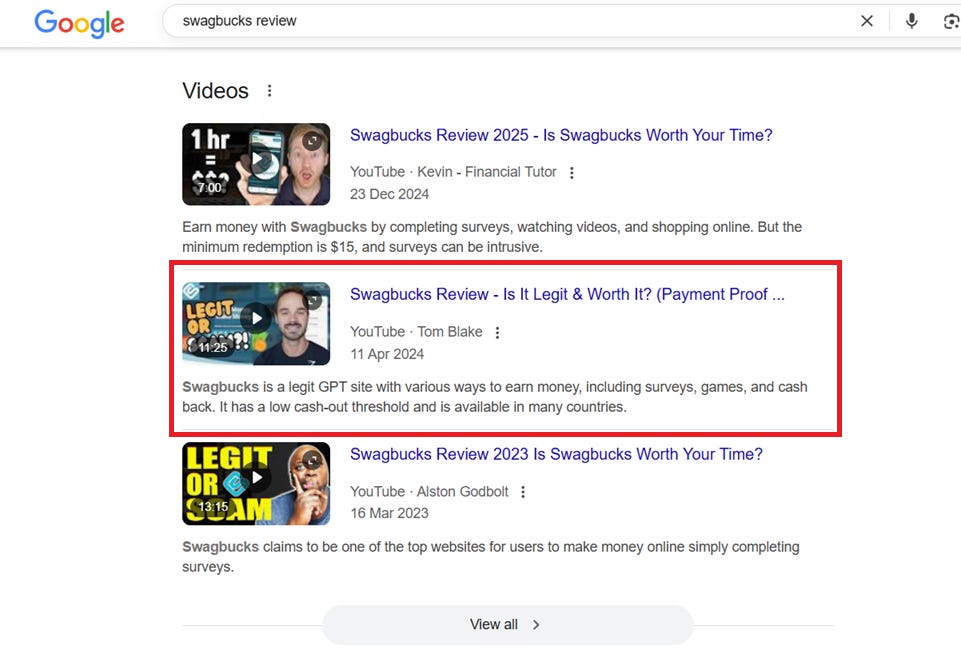
This process took a few hours for each company. But the transparency and payment proof in my content puts my content miles ahead of any other personal finance blogger who can’t prove that they’ve used the platforms.
People aren’t stupid either. They know when they’re being lied too, or when something is too good to be true.
If you put in just a bit more work than competitors in your niche, you’ll be in the top 5% of writers and creators. It’s actually crazy how low the bar is for this kind of thing. No one does first-hand research anymore, especially with AI tools these days.
Interview subject matter experts. Run weird experiments yourself and document the journey. Do something a little crazy that other journalists, influencers, and writers don’t have time or patience to do. It takes more time, but your conversion rates will skyrocket.
Extra Reading: 3 Skills Every One-Person Business Owner Must Master.
Rule #4: Don’t Underestimate The Power Of Increasing Output
Most content creators and writers underestimate the value of increasing output.
This was my #1 mistake as a blogger, YouTuber, and writer for years…You build a machine that turns attention into dollars, but then you never pour fuel on the fire.
Ask yourself: how would your content business change if you double, tripled, or 10X’d your content output?
Assume some drop in overall quality, sure. But how would your monthly impressions, clicks, email subscribers, and overall revenue change if you pulled the content output lever?
It’s a simple question that’s easily overlooked.
When I went from publishing 1 blog post per week to 5/6 times per week, my income went from about $27,000 per year to crossing the $500,000+ mark in my blog’s last year before selling it.
Same with making money on YouTube. Going from scripting and publishing 2 videos a month to 8 videos a month more than quadrupled income and views.
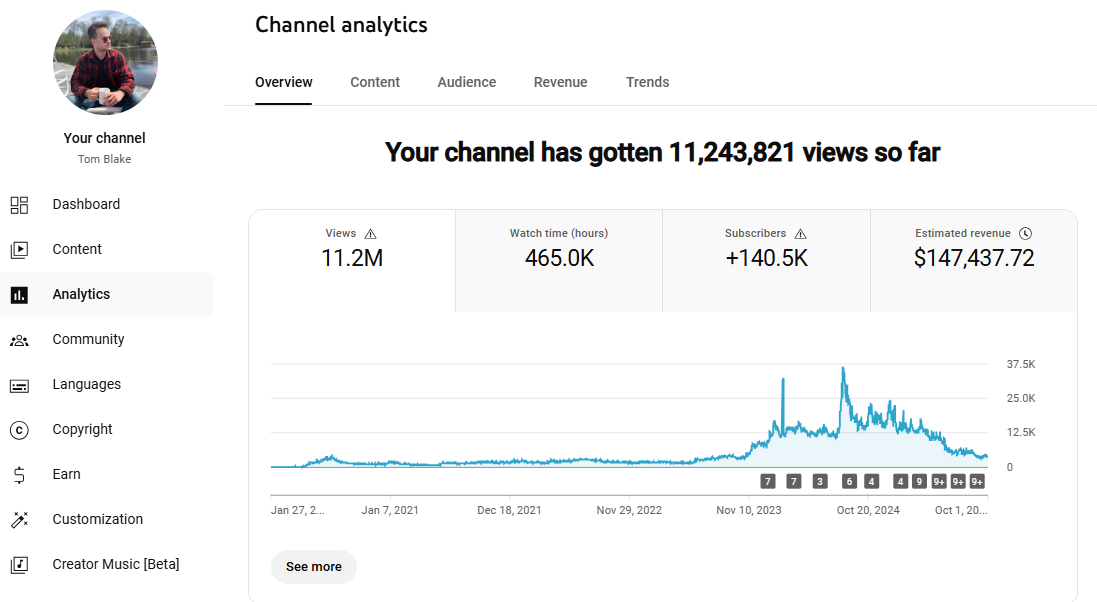
It’s also worth noting: some of your competitors might be doing 100X or more content volume than you right now. This puts them in an entirely different stratosphere, even though your content businesses might seem similar.
💵 Update: You can get my new YouTube Freedom Launchpad eBook to learn how I build profitable niche channels and how you can do the same thing for your favorite niches.
Rule #5: Don’t Underestimate Market Size
This relates to Rule 3.
Most people underestimate the size of the market / their audience.
I did this too for years. I’d promote various finance apps or side hustles in my content as an affiliate marketer. But I was always shy of promoting the same partners too often because I was scared of burning out my audience.
If you have a super small audience that doesn’t grow, this might hold true.
However, if your content reaches new eyeballs each month, hammering your converting offers, products, and services will increase revenue.
These days, I promote the same top 10 affiliate offers every single week and day via my content sites and other newsletters. I’ll mix in some new offerings for variety, but again, the 80-20 rule holds true.
I don’t really care if people churn either for this particular content business. A subscriber is worth $0.50 to $5 for me based on the country they’re from for this niche. It’s not a high-ticket space where there’s a long sales cycle, or one that requires white-glove service to land a sale.
If you pay a significant amount for leads because you’re in a high-ticket space, this is a little different. But for most niches, I think people can sell more and stress less about audience fatigue/churn.
Rule #6: Write For Problems, Not People
Most of the money in content creation comes from solving problems for people.
You can also earn by creating content that amuses or inspires people, but this is less straightforward.
Yet many creators make the mistake of writing for an audience instead of for a problem. They ask themselves:
“What do I want to say?” or “Will this get likes?”
That’s vanity thinking. Likes don’t pay the bills. The content that makes real money typically solves urgent, specific problems.
After all, people don’t Google “content that inspires me.” They Google: “how to make money from home” or “best gifts for new homeowners.”
A golden rule is to write to provide value and to be useful, not just for the sake of writing or hearing your own voice.
This is why I think writers should also leverage Google Trends, People Also Ask, and keyword data from tools like SEMRush. You can use data to inform your content strategy and solve problems people are actively looking for help with.
Rule #7: Ignore Vanity Metrics (& Focus On These Metrics Instead)
Many content creators branch out into several platforms to try and build their brand.
This isn’t inherently bad. However, it’s a slippery slope that often leads to chasing vanity metrics instead of metrics that drive revenue.
Instagram followers, social media likes, podcast appearances, and other collaborations are prime examples. They feel awesome to get, but depending on your niche and offerings, they often don’t translate to additional business.
This is why I’m not really on Instagram or TikTok right now as an affiliate marketer. I know there’s money there, but for my niche, I’d rather scale long-form YouTube and my newsletters first before investing in new platforms.
I encourage writers and content creators to reframe their thinking. Focusing on these metrics also provides a better overview of your content business’ performance:
Total monthly views
Total monthly emails sent
Email open and click-through rates
Earnings-per-click (EPCs) that you send to your offers
Monthly recurring revenue
Monthly sponsorship income
These are main drivers of revenue for content businesses. But they’re easy to mess up. I mean, if you get sick and don’t send emails for a few days, you can quickly send 10% fewer emails in that month than last month…Depending on your list size, this could be a pretty significant hit to revenue that you overlook.
Rule #8: Content Repurposing Scales $$$ Like Wildfire
Content repurposing is one of the fastest ways to get more mileage out of the work you’re already doing.
Substack writing is a perfect example. Chances are, you’re creating some high-quality stuff here. If you hit publish once and then forget about it, you’re missing out on a lot of extra juice.
Here are some quick ways to repurpose your articles/writing into new formats:
Turn Substack posts into video scripts for YouTube
Convert long posts into snippets for your newsletter
Create short-form posts for Substack Notes and Twitter/X
Create Pinterest images for your Substack posts using ChatGPT and Pin them
Syndicate your content to platforms like Medium
Turn your most valuable ideas into mini eBooks that you sell
Most of these tasks can be handled with ChatGPT or by hiring a virtual assistant. Depending on your niche and what you sell, even a 10% - 20% lift in traffic from repurposing could be quite lucrative.
Rule #9: Negotiate Better Deals - Think Like An Owner-Operator!
Content creators and writers can fall into a trap where they focus on meeting deadlines but neglect other areas of their business, like upselling clients or increasing their rates.
Once again, this is something I did for years as a freelance writer and affiliate marketer/blogger.
If you deliver quality content for clients, it’s worth upping your rates at least annually.
This is a bit trickier these days since the freelance writing industry has been gutted by AI, but even if you don’t increase your rates directly, you can probably come up with some kind of upsell or service to pitch clients.
And for affiliate marketers or creators who land brand sponsorships, never stop pushing for more competitive rates.
Even a small amount of scale here can translate to incredibly easy money.
Example: I was sending about 1,000 conversions/month to a paid survey company I worked with for several years. They paid a $3 CPA per conversion, which was about $3,000 a month.
They never increased this CPA payment in over 2 years of working together. One day, I emailed my account manager, asked for a $4 CPA, and promised to include their company in a more newsletters and videos to get more volume.
They agreed, and for delivering a rough 15% volume bump, I got bumped up to a $4 CPA. With barely any extra effort, an extra $1,000+ in margin just materialized, all from a couple of emails and maintaining a relationship with my account manager.
If you’re creating content for other people, you’re part of their marketing mix. When your content produces results, advocate for yourself. Account managers are always looking to allocate budgets, or they lose them, so it’s often easier than you think to get payout bumps.
Extra Reading: 9 Ways To Market Your One-Person Business.
Rule #10: Double-Down On What Works
If your audience or the almighty algorithm Gods bless you with traffic and sales, do more of what you’re doing.
Again, a simple lesson that’s often overlooked.
This was me for years with blogging and YouTube. I made content that I felt like making, even if it was outside of the niche content that was already working for me.
This was fun, sure. But it was an expensive kind of fun.
When your audience or the platform you’re on gives you positive reinforcement, follow it. Create spin-offs of your best content, dive deeper into related topics, and find creative ways to dominate that topic while the sun is shining.
What’s Next?
Making money with writing doesn’t happen through luck or some kind of magic.
Successful writers and content creators treat writing like a business. They focus on solving problems, understand which content types drive revenue, scale output, and stay consistent.
These rules aren’t secrets at all…they’re fundamentals.
If you want writing to pay your bills, fund your freedom, or build a life on your own terms, start applying these rules today. One rule at a time. One post at a time. And then watch how consistent effort compounds.
After all, every piece of content you create is an asset for your business. It takes time and resources to produce. Approach your writing with this mindset, and you’ll see the shift in revenue and traffic begin to take shape.
Thanks for reading, that does it for this one.
I’ll catch you guys in the next one.
Tom from WiFi Wealth.
PS: Want to schedule a consulting call to optimize your content strategy? Get in touch with me here and let’s take your writing to the next level! 👉 https://pillar.io/tomblakefinance
This is so good... No gimmicks, no quackery. Love your writing.
Thank you for the great effort you’re always making to help others. Very nice🍻