The 3 Competitive Advantages That Make Solopreneurs Rich
Pick One: Data, Deals, or Distribution


Deals.
Data.
Distribution.
You only need to pick one and master it to make money with your one-person business.
This is an interesting concept I heard in a recent podcast episode from Jacky Chou, an online entrepreneur and SEO expert I’ve followed for a while.
The premise intrigued me immediately…what do you mean, you only need one of these three components to win with your one-person business?
But the more I thought about this concept, the more I agreed.
Mastering one of these elements for your own one-person business is a recipe success. Each one is its own unique moat that helps you capture customers and ultimately make more money, just in different ways.
That said, it’s crucial you pick the right competitive edge to build based on your business’ current stage, income goals, and your own skillset.
Personally, I’m going for number #3 to grow my businesses. This is also that strategy I used to make $1M+ in my twenties with my media business. I’m avoiding #2, and think the first option is easiest to implement.
Let’s break down these 3 strategies and how you can implement them for your own business.
💸 A couple fun updates before I get into things…
1️⃣ I just put out an updated list of my top money-making tools and platforms. This includes some easy wins you can use to boost your income plus powerful tools I’m using to run my numerous online businesses more efficiently.
2️⃣ I’m also opening consulting calls again with limited availability. If you want to develop a strategy to scale your traffic and revenue, you can book a paid call with me here. Let’s chat about ways to begin growing your business!
Strategy #1: Win With Deals
In the Fortune 500 world, winning with deals generally means landing a massive partnership with another company that can:
Bring an enhanced service offering to customers
Lower costs for customers
Provides more overall value than what competitors are doing
We’re seeing this happen all the time these days, especially in the AI arms race. Just look at the Anthropic-SpaceX deal recently, or how Nvidia is pouring money back into the AI boom.
Now if you’re running a small team or one-person business, you probably can’t bankroll angel investments or insane business development deals like these…So, what can you do?
Well, there’s a few routes you can take.
Option 1: Offer Pricing Deals
When I started freelance writing, I took on a lot of bottom-of-the-barrel pricing clients.
This was frankly to pay my bills and gain experience. But something funny happened to me after a few months of writing for $0.05 per word while writers I knew were commanding anywhere $0.15 to $0.50 per word.
My monthly income kept increasing.
I was getting tons of business through word-of-mouth referrals. I landed a couple of clients at $0.07 and $0.10 per word as well. Eventually, I brought on a sneaky ghostwriter to help me with some of my cheapest clients so I could focus on pitching upwards.
Another funny thing?
My hourly rate for the bottom-of-the-barrel pricing clients was still solid. The content was so easy to create, I’d bust out two articles while watching Netflix without breaking a sweat. A quick $100 just like that, which meant a lot to someone who had quit their office job recently to try the whole digital nomad thing.
Now, this pricing strategy didn’t last forever. I eventually started writing for Forbes and several larger publications or premium finance brands. The pay was excellent, and it wasn’t long before I was making $10,000+ per month with my writing. But to land the whale clients, I had to secure my income first and also develop enough connections in the industry to move up the food chain.
Freelance writing ain’t what it used to be (thanks ChatGPT!) But there’s some takeaways here.
Firstly, if you’re just starting out, don’t snub your nose at playing the pricing game.
Your #1 goal is to not go out of business. You need to put food on the table. It is okay to trade time for money at the start to develop proof of concept, sharpen your skills, and to get some income flowing.
Secondly, if you’re young, you can absolutely trade sweat equity for money. This is what I did for several years in my early and mid-twenties and would absolutely do it again. Try working 60-80 hours one week and see what you can accomplish. You won’t die.
Finally, it’s true that cheap clients can often cause more headaches than they’re worth. But there’s also plenty of cheap clients out there that know exactly what they’re paying for and set expectations accordingly. Pre-vetting clients and setting measurable deliverables is important. My most difficult clients have always been in the mid-pricing tier for whatever business I’m operating, which is interesting.
The Takeaway: I argue you should be hungrier for business than ever, especially in the current environment with AI and automation. If I was starting from $0 and wanted to hit $10K/month, I would productize a service I know how to fulfill, discount my pricing, and grind it out. Eventually you can build up enough cash to hire or outsource so you’re less in the trenches.
Option 2: Offer Quality & Peace of Mind Deals
This one is the flip side to discounted pricing deals…You offer a quality deal instead.
Premium pricing generally has this worked in. It looks like:
‘X-days satisfaction guarantee or your money back
Warranties (i.e. if what I give you breaks or stops working within X days, you get compensated)
‘Only paid if X happens’ → I.e. performance-based pricing
Tailored offerings (i.e. going above and beyond for the client with some tailored service they ask for)
Delivery speed (I’ll do X faster than competitor Y)
What’s nice about many of these strategies is that customers don’t always take advantage of the deal they pay extra for.
People won’t be fully satisfied sometimes for whatever reason, yet they don’t request a refund. Or, a client asks for delivery at certain speed, but they create enough bottlenecks on their own so your workload never actually changes.
I see this with consulting all the time. I’m paid monthly retainers to consult on SEO, YouTube content, or whatever, and I end up getting two paychecks just going through onboarding and some basic intro calls.
The Takeaway: If you don’t have premium upsell in your lineup, create one. This is what I did when I created consulting offerings alongside my basic freelance writing work. Some percentage of your customer base is likely willing to pay extra to get ‘better’ results or ‘faster’ results or whatever they associate paying more will achieve.
Related: 10 Ways Solopreneurs Can Instantly Make More Money.
Option 3: Offer Deals Through Strategic Partnerships
This option is the business development route to landing more customers and making more money…This isn’t just for Fortune 500 companies or massive teams.
Here’s a pretty simple example.
I’m living in Cape Town at the moment. Some of my friends here work in the booming tourism industry. It’s ultra competitive, especially for services like guided hikes or day tours.

One of my friends offers these kinds of tours. To get more business, they’ve networked with dozens of related tour operators who aren’t direct competitors. They now send each other business and each give each other a small kickback per new customer.
It’s a win-win scenario. Actually, a win-win-win scenario since they’ve all agreed to give customers slight discounts through this referral path.
You can do this for tons of service-based businesses. I’ve done it for my content business’ as well and connected other media businesses with brands for a kickback.
What I find crazy about this path is sometimes, building a new referral path literally takes a few emails back and forth or a call.
Many of these relationships fizzle or become one-sided over time. But when you land a good one where both parties profit, it’s incredible.
The Takeaway: If you go down this path, dedicated a few hours per week to outreach and networking with this goal in mind. You need to be intentional here; this isn’t something that magically happens.
Extra Reading: Why Coast FIRE + Geo Arbitrage Is The Fastest Path To Freedom.
Strategy #2: Win With Data
Winning with data generally means:
Having enough data about your customers to offer exceptional personalized services (i.e. upsells at the right time, personalized offerings, and really drilling into your customer segments to create a unique experience for people)
Having enough data about customer acquisition costs to nail marketing and your paid funnels (i.e. you can pay $100 for leads all day long because you know your customer LTV is $450 and how the math works out for your margins)
I dislike this route for my own businesses and most one-person businesses or small teams.
Here’s why: Data can absolutely be a moat. But you need enough data and infrastructure to make this happen, which is incredibly hard to pull off, especially as a one-person business or small team.
I’ve met people who agonize over conversion-rate optimization for a mobile app with 5 paying users. I used to spend hours optimizing AdSense ads on my first blog that got a couple thousand visitors per month at the time.
Until you reach a certain stage of traffic, revenue, and deal-flow, it’s hard to have enough data to do anything meaningful. Perhaps coaches can go down the ultra-personalized service offering route if they collect enough data with intake forms, but for most businesses, I think this is barking up the wrong tree.
PLUS to make the data play possible in the first place, I argue strategy #3 is what many entrepreneurs should focus on…
Strategy #3: Win With Distribution - What I’m Chasing
Most of your customers have zero idea that you exist.
It doesn’t matter if you’re posting daily, running paid ads, speaking at conferences, and are even going viral on social media regularly.
For most industries, you don’t own a drop in the bucket of market share. Not even close.
It took me years for this fact to sink in.
I was running a profitable blog, I was growing on YouTube, but revenue was pretty slow-growing. I was spending time trying to optimize revenue and find new brands to work with, but this didn’t really move the needle.
Eventually, I decided to basically 5X my content output and just do more, and guess what? Revenue followed pretty quickly.
The Pareto Principle (i.e. the 80/20 rule) is good to follow here: What would 5-10xing your 20% most valuable marketing strategy do for your business?
For me, this looked like publishing daily on my blog instead of weekly. I send out daily newsletters instead of bi-weekly ones. On the YouTube side, I publish twice per week now and also send out dozens of brand pitches per week instead of waiting for them to come to me.
Simultaneously, I stopped posting on Instagram since it never drove clicks. I worked with fewer affiliate offers but focused on the ones that worked. I didn’t really go down the courses path because it’s not an investment I could spare. I also stopped accepting stupid 1:1 intro calls with people I already knew weren’t going to go anywhere. I stopped replying to a lot of emails too. Huge time save.
To be fair, saying “just do 5-10x more of the most important aspect of your marketing funnel” might sound easier said than done.
But to counter, there’s a solid chance you know deep down what you need to do more of. You’re just hesitating because building out systems to make this happen feels uncomfortable and risky.
This was how I operated for years. Then I started outsourcing and building actual systems that can scale, and this changed everything.
These days, you can use AI tools to accelerate your marketing efforts. I also cover some creative and free marketing tactics for one-person business owners you can try too.
Unless you are absolutely drowning in business and turning paying customers away, unlocking more distribution will likely help.
There’s a story I love here too: how Matt Paulson built MarketBeat into a $60M/year finance publication with just 19 employees and zero outside investment.
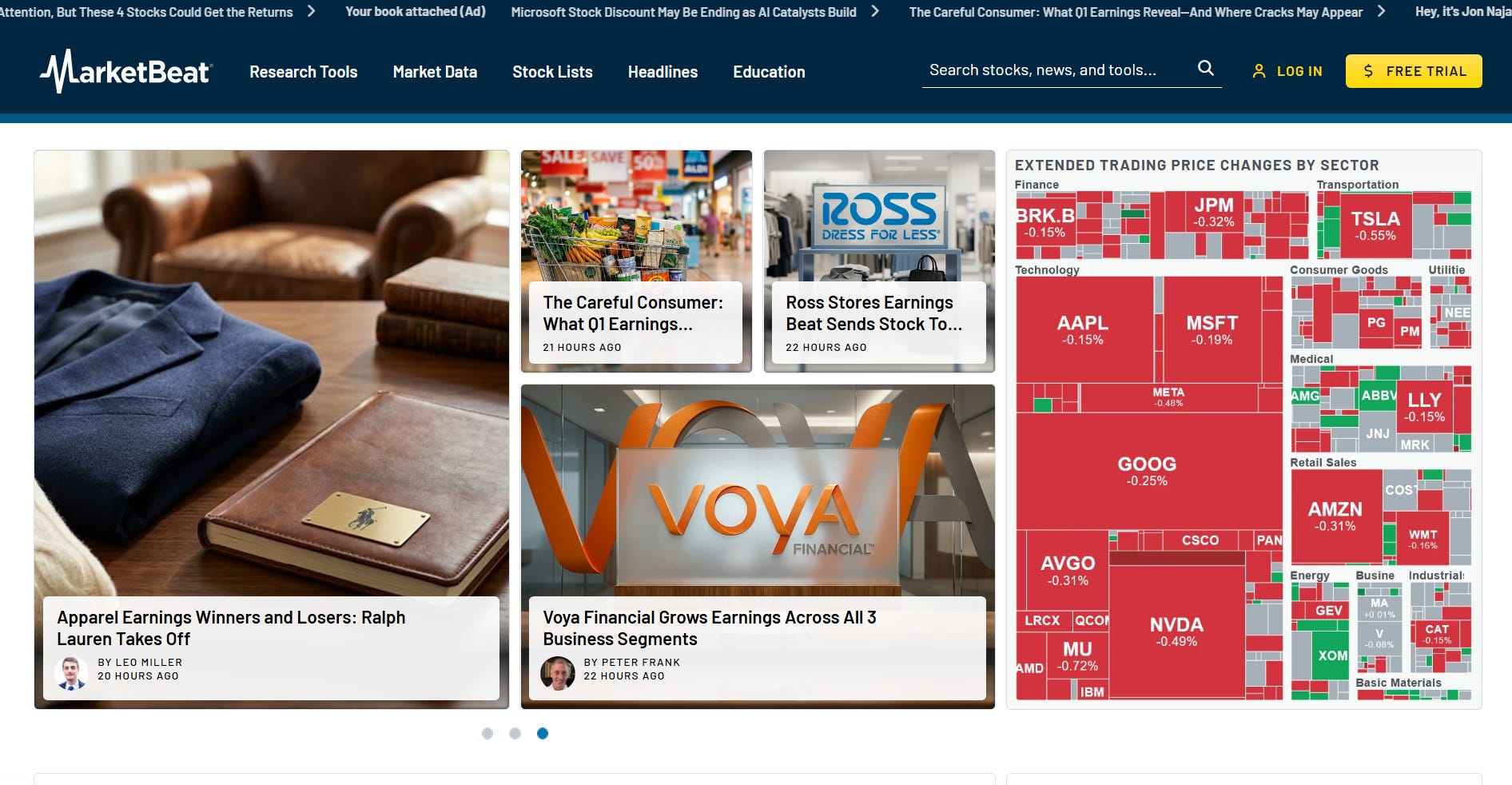
This is such an awesome example of what can happen when you win at distribution.
MarketBeat is a newsletter with around 5 million email subscribers. It has a series of related newsletters as well, SMS lists, Push Notification lists, and a YouTube channel with 600,000+ subscribers.
MarketBeat is crushing distribution. They literally send billions of emails a year. And newer channels like SMS and YouTube are printing cash.
In a nutshell, MarketBeat has built so many sticky distribution channels that they aren’t at the mercy of a single platform or algorithm. They monetize customers as soon as they walk through the door, and then they upsell them continuously.
The beautiful part is that this unlocks strategy #2, the ‘win with data’ play. MarketBeat can now spend around $1.5M per month in paid acquisition to their newsletter because they know exactly how much their subscribers are worth and what they can afford to spend on each platform.
How insane is that?
They’re spending $1M+ monthly on getting new people on their email list. Within 90 days or sooner, MarketBeat breaks even. From there, it’s all gravy since deliverability costs in online media are miniscule.
This is an ultimate example of how powerful nailing distribution can be.
The Takeaway: Take a few hours this week and analyze your most valuable marketing efforts. Outline the bottlenecks that are keeping you from ramping this. You might need to hire or invest in outsourcing. Alternatively, you could leverage automation to win back some time. Or, bluntly, you could sink more time into it and give up some free time. There’s no right answer here, but tracking your output and having distribution goals is vital.
Next Steps
I love writing about one-person businesses. After all, starting a one-person business can change your life. It changed mine, and it’s easier to start one than ever before thanks to AI and tech.
This doesn’t mean this is easy.
Plenty of businesses go under. You can have slow years too or slide backwards. I’m down this year versus last, but you roll with the punches and keep things moving.
What’s encouraging is that you don’t need to win on all fronts to make money here. Unlocking one competitive advantage and dialing in on it is likely enough to succeed.
Personally, I’m chasing distribution. I want more email subscribers here and on Kit. I want to grow more YouTube channels and improve viewer retention/subscriber loyalty. I’m building a new Reddit funnel that’s already making money, and this cross-promotes my new vibe-coded project and Skool community. When I publish something or promote an offer, I want to land in front of as many people as possible.
If you take a critical look at your own business, you probably know what you should be chasing. Time to make a gameplan and make it happen!
Hope you liked this article. I always appreciate shares/restacks/comments if you did. Let me know what you think as well.
Catch you in the next one.
Tom from WiFi Wealth.
Want to take your online business to the next level? 👉 Book a paid consulting call with me. Let’s uncover strategies to grow your audience and scale income.
Want More Useful Guides? Checkout: