
7 REALISTIC Passive Income Streams For Building Real Wealth
Skip the fantasies. These are income streams ordinary people are building in 2026.


Recently, I covered how you can start creating micro-income streams to accelerate your path to financial independence.
This post got a lot of views. It resonates with people who want to take action to build wealth and diversify their income so they’re not at the mercy of their employer.
BUT the most common question I got was this: “creating micro-income streams is great and all, but what do I do if I’m super busy and don’t have time to start a new side hustle?”
Well, that’s what this post is all about.
Today, I’m covering 7 realistic passive income streams that you can leverage to make your money and other assets work for you behind the scenes.
Now passive income gets a lot of hate. This is understandable since it’s often misrepresented as a surefire way to become super rich without lifting a finger.
This post isn’t making this promise.
Instead, you’ll find actionable, simple ways to put your money and assets to work for you. I’ll also share two ideas that you can begin with $0 to get the ball rolling, starting as soon as today.
If you want to diversify your income and put time + compound interest to work for your financial future, this one is for you.
Let’s get to it 😎
💸 Want to ditch bank fees and earn 4.00% APY on your savings?
Then you should absolutely sign up for Current.
Current is a digital banking solution that pays 4.00% APY on up to $6,000 in savings. And this is where I’m holding my emergency fund so the money actually earns meaningful interest.
Current doesn’t charge monthly maintenance fees either. And it even has a free rewards checking account where you earn cashback points for your spending.
Make sure your savings are working as hard as you do.
1. Get Paid For Your Data
Fun fact: when I was a college student, I ran a ‘phone farm’ of burner phones that ran a bunch of video reward apps 24/7.
These apps paid me for ‘watching’ videos and ads. Some of them also paid me for sharing my data or sharing my internet bandwidth. They also made my dorm room look interesting, to say the least.

Let me tell you, I have tested a ton of side hustles over the years 😂 But phone farming certainly takes the cake in terms of weirdness.
That said, I still use plenty of data reward apps to this day on my spare phone. And this is by far the easiest way to start earning a bit extra on the side, even if you’re starting out with $0.
Some of the best passive reward apps in this space I suggest checking out include:
Nielsen Pulse: This is a brand new rewards app that pays you for sharing data about the TV shows, movies, and content you stream. You can share data from your phone, laptop, and TV. The more data you share, the more you earn. Realistically this is a $50 to $200 per year side hustle depending on how much data you share.
Nielsen Computer & Mobile Panel: This one is also from Nielsen, a massive market research company that’s behind the Nielsen TV Ratings. Similar idea to Nielsen Pulse, except you’re paid to share data about the content you see around the web. This one pays about $60 per year.
MobileXpresion: This is an Android and iOS app that also lets you earn for sharing data about the websites you visit and the ads you see online. It can make about $30 to $50 per year in my experience.
Pogo: Pogo pays you with small amounts of money for sharing data about the products you shop for. It has more active earning methods too, like surveys, but its ‘data dividends’ program is what I like using it for.
Of course, this one is just a small side hustle. A ‘beermoney’ idea, if you will. You also have to be comfortable sharing your data with market research companies for this option, which isn’t for everyone.
I’ve been doing this for years in the name of side hustle testing and because I enjoy trying random apps. And if you stack all of these, it’s a realistic $150 to $300+ per year.
You can decide if this is worth it for you or not! Just read the privacy policies and terms and conditions of these apps so you know which data is being collected.
2. Earn Cashback Rewards
Earning cashback rewards is another simple, fully passive income option you can mix into your life. It’s the sort of thing you have to spend 10 minutes researching and setting up, and then you don’t have to think about it again.
Personally, I earn most of my annual cashback through my credit card.
I know the Dave Ramsey crowd is absolutely against credit cards. But if you can spend responsibly and live within your means, I argue they’re absolutely worth using.
I have different cards for different purposes. One pays 2% cashback on pretty much every purchase category. I have another one that has better travel rewards and cashback, and one that has rotating categories with up to 5% cashback.

Again, if you’re prone to overspending, this idea isn’t for you. But at the very least, do some research and look for a rewards checking account if you prefer sticking with a debit card.
I’ll also note there’s other cashback methods out there that don’t involve your bank cards.
For example, I use several cashback reward apps alongside data reward apps. Again, I’m a sucker for this stuff and love testing them 😂
There’s apps like Upside which pay you with cashback when you refuel at thousands of gas stations across the country. I use ShopBack and Rakuten for online purchases to earn as well.
Independently, none of these apps make a real difference. But when you stack them alongside credit card rewards (especially ones with sign-up bonuses), you can realistically earn another $500 to $1,000 per year in cashback. Not too shabby if you ask me!
💸 Extra Reading - How To Make An Extra $1,000 Per Month.
3. Start Investing To Build Wealth
The first two ideas in this guide are the easiest ways to start earning passive income. Basically, the low-hanging fruit.
Once you start earning a bit of extra cash, a world of opportunities open up.
One of these is investing, which is absolutely something everyone should be doing if they want to begin building wealth and make their money work for them.
Now there’s all kinds of investing philosophies and routes you can go.
Personally, I keep my investments simple. I invest in a variety of growth-focused ETFs and index funds. I also mix-in some dividend-focused ETFs and individual stocks and reinvest those dividends into buying more shares.
The power of investing is that you get time and compound interest working on your side. Again, this is a key to building long-term wealth for most people.
Here’s a scenario to highlight this:
Assume you’re starting with $0 in your portfolio
Assume you contribute $500 per month to this portfolio
Assume a 7% annual rate of return
Assume you diligently invest this amount (and not a penny more, even) over 30 years
After 30 years, your portfolio will have grown to over $550,000 👇
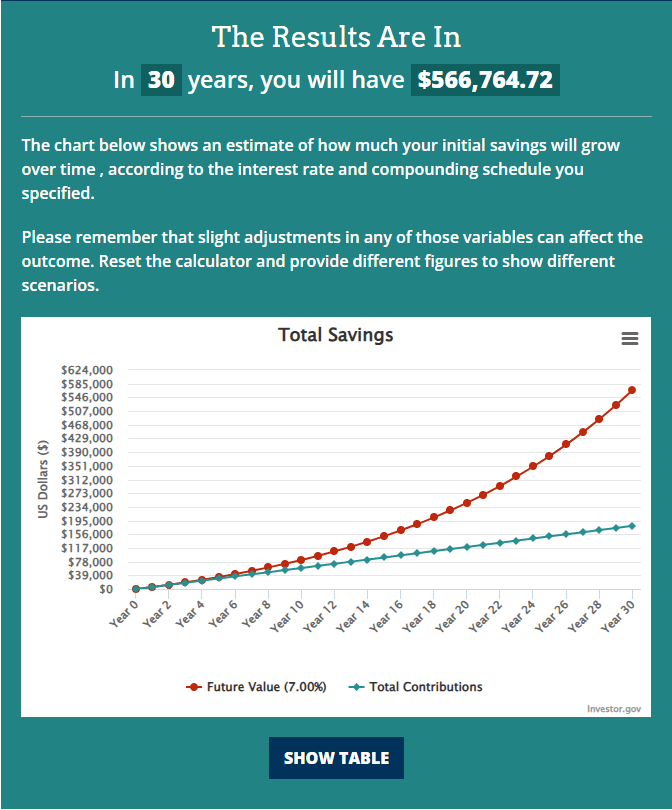
This is once again assuming you’re staring at absolute zero and never contribute more than $500 per month over three decades…Unlikely if you begin earning more and put that money to work for you.
Of course you can get rich by starting a one-person business. You can get rich by working a 9-5 job too.
However, stacking this with diligent investing is how you make your wealth compound. It’s something I wish they taught in schools, because once you see the impact of compounding on your own life, there’s absolutely no going back.
My advice is to ultimately keep things simple here. Read about basic index fund/ETF investing, dollar-cost averaging, and decide to become an investor if you haven’t yet. It might seem intimidating at first, but this is absolutely one of the most important financial life skills you’ll ever develop.
📲 Get a $5 free stock bonus from Stash and begin investing in portfolios that match your goals and risk tolerance.
4. Real Estate Crowdfunding
Real estate crowdfunding involves buying shares of income-generating real estate and then earning distributions from the cashflow these properties produce.
There’s been quite a rise in the whole real estate crowdfunding space over the last 5-10 years.
The main advantage is that they let you add real estate to your portfolio without actually buying a full-on property yourself. They’re fully managed too, so you’re not getting a call at midnight to change a lightbulb or deal with rowdy tenants.
This lets you earn monthly cashflow without taking on the risks and headaches of a landlord. If you’re investing in the market, real estate can also provide some hedging and diversification.
The downsides?
Real estate crowdfunding investments aren’t super liquid; you have to buy and hold these investments and rely on the cashflow for them to be worthwhile. Additionally, real estate crowdfunding platforms can underperform versus the general market, and often do.
There’s a surprising number of crowdfunding companies out there these days. Some of the leading options you can consider include:
Ark7: This is a newer player in the crowdfunding world. You can buy shares of income-generating residential rentals starting at $20 per share. Ark7 distributes to investors monthly.
Arrived: Another beginner-friendly option. There’s a $100 minimum investment requirement, and Arrived also pays investors monthly.
Fundrise: Fundrise is one of the older companies in the real estate crowdfunding market. It’s known for its low $10 minimum investment requirement. Fundrise also invests in a combination of residential and commercial real estate properties. Fundrise makes distributions quarterly.
EquityMultiple: EquityMultiple specializes in commercial real estate and has a $5,000 minimum investment requirement for certain properties. Distributions vary by deal but typically occur monthly or quarterly.

There’s even more options if you do a quick Google search. Many cater to first-time investors while others target accredited investors looking for diversification.
Personally, I put most of my money into the market. I prefer dividend stocks/ETFs and growth-focused investments to real estate. But this is one passive income route I’m exploring now, and it also has an element of fun to it.
Also note: real estate crowdfunding is different from investing in Real Estate Investment Trusts (REITs). REITs also own and operate income-generating real estate and are required to distribute a certain percentage of taxable income back to investors as dividends. You can find a variety of publicly traded REITs and REIT ETFs.
5. Fixed-Income Investing
Fixed-income investing is what it sounds like: you invest your money into assets and securities that provide a reliable, fixed rate of return.
The upside of these investments are predictable income and, typically, less risk than investing in the market. The downside is your returns, on average, are far lower than the market.
For young adults, keeping some of your emergency fund and extra cash you have (that’s not invested) in fixed-income investments is a popular strategy. As people enter retirement, they tend to prioritize fixed income more and rely less on growth. Ultimately, the balance you pick is up to you, your goals, and your risk tolerance.
Examples of common fixed-income investments you can consider include:
High Yield Savings Accounts (HYSA): Not technically fixed income, but it functions similarly. A HYSA is where I suggest parking your emergency fund and idle cash. I use Current for my emergency fund since it doesn’t have monthly fees and pays 4% APY on up to $6,000. You can also check out a list of top high-yield savings accounts for more options as rates change monthly.
Bonds: This can include corporate bonds, government bonds, municipal bonds, and other classes. Bonds are essentially loans you’re making to another entity in exchange for a fixed interest rate.
Certificates of Deposit (CDs): CDs are issued by banks and credit unions. You essentially lock-up your funds in a CD for a fixed period of time and earn a fixed interest rate. There’s also no-penalty CDs which let you withdraw your funds earlier, so you can find flexibility here.
Treasury Bills: These are short-term debt securities that are issued by the U.S. government. Maturity lengths and interest rates vary.
Money Market Funds: A money market fund is a fund that invests in a variety of lower-risk debt securities. This typically includes CDs, treasury bills, and other fixed-income investments.
Cash Management Accounts (CMA): A CMA is like a mix between a HYSA and a checking account in that you earn interest on your deposits but also have the spending features of a checking account. Options like Empower’s Cash Account pay 3.30% APY currently, and I also like the net-worth tracking and investing features you get through Empower as well. Again, not technically a fixed-income vehicle, but functions similarly in that you earn predictable interest.
There’s even more fixed-income securities out there, like preferred stocks, all kinds of bonds, debt investments, GICs, and more. But this is the generally gist of investing for fixed income.
My advice: start out by building up your emergency fund and opening a competitive HYSA. You can branch out into more fixed-income strategies afterwards, but don’t neglect growth-focused investing if you’re younger and have a longer time horizon than someone entering retirement.
Extra Reading: The 4 Automations That Make Me Money 24/7.
6. Start A Rental Side Hustle
I mention rental side hustles in my post on creating micro-income streams. The idea is to tap into the ‘sharing economy’ and monetize assets you own that other people want to rent from you.
Airbnb is the classic example. But most people don’t realize just how many niche rental marketplaces have sprung up in recent years.
Here’s just a few examples to get the ball rolling:
Hygglo: A general rental marketplace for cameras, drones, electronics, sports equipment, and more.
BabyQuip: Lets you rent out baby gear like strollers and cribs.
Turo: This is the ‘Airbnb of car sharing'.’
Neighbor: Rent out spare storage space you have, like a garage, attic, shed, backyard, etc.
SpotHero: Rent out your extra parking space or driveway to people.
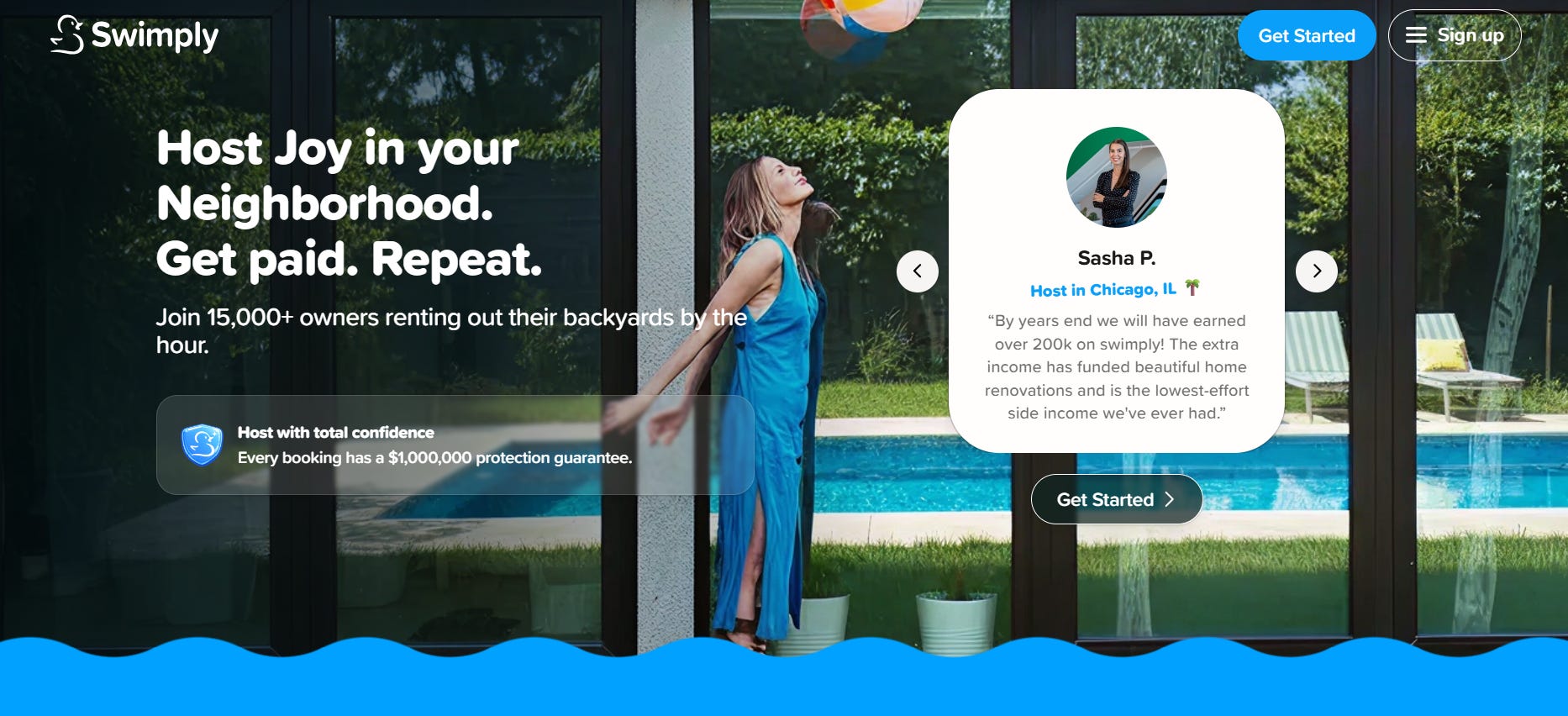
Swimply: This platform lets you rent out your private swimming pool by the hour, if you can believe it 😂
RVShare: A platform for renting out RVs and campervans.
Now each platform has its own rules regarding the rental process and, more importantly, your liability/insurance. Make sure you do your due diligence and research before listing any of your assets for rent.
But if you have a spare parking space, empty attic, and some other valuable assets laying around, you could always try monetizing them with these kinds of platforms.
7. P2P Lending
This passive income idea is pretty out-of-the-box. It’s also certainly outside my comfort zone, but it’s an interesting one.
P2P lending involves making loans to other people and earning interest on that loan. You’re essentially acting as the bank in this case.
The attraction of P2P loans is that you can earn a fixed interest rate and also create a diversified loan portfolio pretty quickly by spreading out your capital to numerous borrowers.
The downside? Borrowers can default, and then you’re left holding the bag.
Platforms like Mintos, Prosper, Lenme, and Funding Circle facilitate P2P lending. There’s even a Reddit community called r/Borrow that’s even more informal, where Redditors lend out money to each other.
This one isn’t my cup of tea. At all. I’d rather put my money into the market or fixed-income investments.
That said, if you’re chasing short-term loans with higher interest rates and can stomach the risk, this is a viable passive income path.
Active Income vs Passive Income - What Actually Matters At The End Of The Day?
I love creating multiple income streams. I have for years. And this is one reason I run two email newsletters, have several content sites, have 4 YouTube channels now, invest, and am pretty much always testing out some random side hustle at a given time 😂
That said, the bulk of my lifetime income has come from active work.
I started with a 9-5 job and then became a full-time freelance writer. Then I got into blogging, and this business ended up making $1M+ and let me become financially free. Again, all active income and work.
These 3 Offers Made Me $1+ Million In My Twenties

In 2017, I started trying to make money online for the first time.
This is the case for most people out there. And it’s disingenuous to position passive income as a primary vehicle for building wealth. Passive income is how you compound wealth and make your money work for you. It’s rarely the main method people rely on to become wealthy.
My advice is therefore to max-out your active income streams, especially if you’re younger.
Focus on learning high-income skills and career hopping aggressively for higher salaries. Experiment with side hustles. Start building cool things to again, develop new skills and open more doors for yourself.
This isn’t saying that investing $200 a month into index funds isn’t meaningful. This is an amazing habit you should continue building. But don’t let the passive income dream distract you from the power of active opportunities as well.
I included some beginner-friendly ideas in this post, like data and cashback rewards, for this reason. These routes let you scratch some of that passive income itch even if you’re starting at $0 right now. Simultaneously, ensure your active income is firing on all cylinders! Work on becoming debt free and then put your money to work for you and your future.
Extra Reading 👉 7 Easy Ways For Anyone To Make Money Online.
What’s Next?
Right now, I’m in full-on build mode.
I have some new YouTube channels in the works. There’s a new social media affiliate funnel I’m scaling quickly. And I am absolutely loving Substack these days. So for everyone reading, thank you for your support and for taking interesting in all of the WiFi Wealth ideas I cover. There’s a lot more experiments and topics I’m excited to share soon.
I hope that these guides encourage you to start testing, experimenting, and taking charge of your income and future.
Even if you start out with small wins, it’s consistency + time that compound and make a difference. Plus, the journey of experimenting and building new things is incredibly enjoyable. Pick an idea or two, put them into action, and start stacking those wins!
Thanks for reading everyone. And again, for all the recent support. It really does mean a lot.
I have some exciting new content coming out shortly, plus the start of a new series and new project involving Substack. I can’t wait to share more soon.
Have a wonderful day and weekend.
Tom from WiFi Wealth.
Want to take your online business to the next level? 👉 Book a paid consulting call with me. Let’s uncover strategies to grow your audience and scale income.
Want More Useful Guides? Checkout:

Note: Some of the links in this article are affiliate links. I may receive compensation when you sign up for these products or services at no additional cost to you. Thank you for supporting my writing.